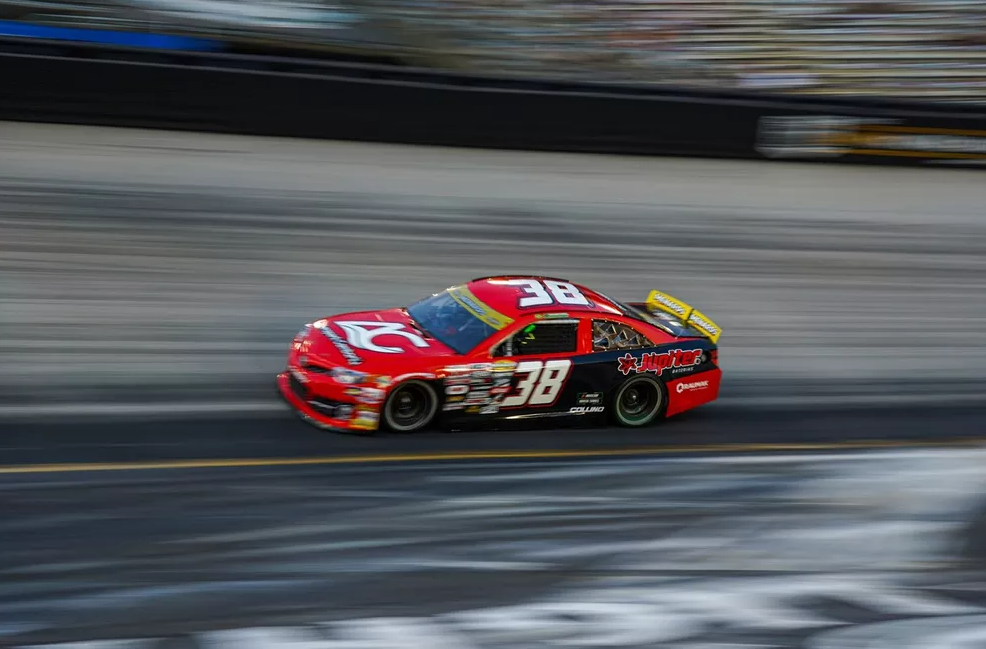
NASCAR qualifying determines where drivers line up for a race, but the procedure changes depending on the track. Most Cup Series ovals use single-car time trials, short tracks typically allow two timed laps, and road courses have group sessions. Daytona, Talladega, and Atlanta use two-round qualifying, while the Daytona 500 adds a pair of qualifying races known as the Duels.
These differences affect how drivers approach their runs and how starting positions are assigned. Qualifying results also help explain why a driver with a competitive car might start farther back than expected.
What Is NASCAR Qualifying?
NASCAR qualifying establishes the starting order through timed laps or event-specific procedures. The driver who earns the first starting position takes the pole, with the rest of the field arranged according to qualifying results, eligibility requirements, and NASCAR rules.
Starting near the front can be particularly valuable at tracks where passing is difficult. At Martinsville, for example, traffic and limited room to overtake make track position important. Superspeedways are different: drafting allows drivers to gain or lose numerous positions within a few laps.
A strong qualifying performance does not guarantee a good finish. Tire wear, pit strategy, cautions, and how a car handles over longer runs can all change the running order.
How Does NASCAR Qualifying Work?
At most ovals, drivers qualify individually against the clock. NASCAR records their official lap times and calculates average speeds using the track’s designated distance. The fastest lap produces the highest average speed.
When a driver receives two timed laps, the faster eligible lap determines the result. At tracks with multiple qualifying rounds, the rules specify which drivers advance and how their starting positions are assigned.
For most 2026 Cup Series events, NASCAR uses a performance metric to determine the order in which cars qualify. The calculation gives 70% weight to the previous race finishing position and 30% to the owner’s points position. The same metric helps establish the starting grid when qualifying is canceled entirely. Special procedures apply to certain events, including the Daytona 500.
NASCAR Qualifying Formats by Track Type
The NASCAR qualifying format varies by circuit, reflecting differences in lap length, cornering demands, and racing conditions. The main procedures are outlined below.
| Track type | Cup Series qualifying format |
| Intermediate and selected larger ovals | One round, one timed lap |
| Short tracks | One round, two timed laps |
| Daytona, Talladega, Atlanta | Two rounds, one timed lap per round; top 10 advance |
| Road courses | Two groups, each with a 20-minute session |
| Daytona 500 | Single-car qualifying followed by two 150-mile Duel races |
These are the principal formats used in the 2026 Cup Series. NASCAR may adjust procedures for individual events, weather disruptions, or other circumstances.
Short Tracks and Intermediate Ovals
At intermediate ovals such as Las Vegas Motor Speedway and Kansas Speedway, drivers generally get one timed lap. A poor corner exit or a small loss of momentum can cost several starting positions, leaving little opportunity to recover.
Short tracks such as Bristol and Martinsville allow two timed laps in a single round. Drivers may use the opening lap to bring their tires up to temperature before pushing harder on the second. However, the first lap can still be the faster one, particularly when tire grip deteriorates quickly.
In either format, carrying speed through the corners matters as much as aggressive entry. Drivers need to get back on the throttle without upsetting the car or sacrificing speed down the following straightaway.
Superspeedways
Daytona, Talladega, and Atlanta use two rounds of single-car qualifying. All eligible entrants complete an opening run, and the ten fastest advance to the final round.
First-round times do not carry over. The final-round speeds determine the top ten qualifying positions, while the remaining cars are ranked by their opening-round results.
Unlike superspeedway racing, qualifying takes place without drafting partners. Teams concentrate on aerodynamic efficiency, minimizing drag, and maintaining speed throughout the lap. Even a small difference in straight-line performance can separate several cars in the standings.
Road Courses
Road-course qualifying divides drivers into two groups, each receiving a 20-minute session. Competitors can complete multiple laps, although circuit length, traffic, and tire condition limit the number of competitive attempts.
Under the 2026 NASCAR qualifying rules, road-course sessions use a single-round format. Starting positions are assigned from the final qualifying results under NASCAR’s grid procedures rather than automatically awarding a front-row position to the fastest driver in each group.
On road courses, drivers need to find the right braking points, accelerate cleanly out of slower corners, and avoid mistakes through technical sections. Finding clear track is also important, particularly when several cars begin fast laps at similar times.
Changing weather can complicate the session. One group may encounter a wetter or drier surface than the other, making the timing of a qualifying attempt especially important.
How Is the NASCAR Starting Lineup Determined?
At most Cup Series events, the final NASCAR qualifying results determine the starting lineup, with the pole winner taking the first position. The remaining spots are assigned according to the qualifying format and NASCAR’s event-specific rules.
Eligibility also matters. Chartered teams have guaranteed entry under the standard Cup Series system, while non-chartered, or Open, teams compete for available positions when the entry list exceeds the field limit.
When qualifying speeds are tied, NASCAR uses team owner points to break the tie. If the tie remains, priority goes to the car that recorded the speed first.
The published NASCAR starting grid may not reflect where every car physically begins the race. A driver penalized after qualifying can retain an assigned position but must move to the rear before the green flag. This can happen following certain inspection violations, unauthorized adjustments, or other rule infractions.
How Does Daytona 500 Qualifying Work?
The Daytona 500 follows a separate procedure combining single-car time trials with two qualifying races called the Duels. Unlike a regular Cup Series event, qualifying speed alone does not establish the entire starting lineup.
Drivers first compete in single-car qualifying at Daytona International Speedway. The ten fastest advance to the second round, where the top two secure the front-row starting positions for the Daytona 500.
The qualifying results also divide competitors between the Duels. Odd-numbered qualifiers generally enter the first race, while even-numbered qualifiers compete in the second. NASCAR can adjust assignments to balance Chartered and Open teams.
Each Duel covers 150 miles, or 60 laps, around Daytona’s 2.5-mile oval. The first determines the inside starting positions behind the pole sitter, while the second establishes the corresponding outside positions behind the second-place qualifier.
The Duels are particularly important for Open teams trying to reach the Daytona 500. Under the 2026 format, the two fastest eligible Open teams from single-car qualifying secure entry on speed. The highest-finishing eligible Open team in each Duel that has not already qualified earns another available position. Teams already qualified on speed use their Duel results to establish their starting places.
The Open Exemption Provisional provides an additional route into the race for an eligible driver who meets NASCAR’s requirements. When awarded under the applicable conditions, it can expand the Daytona 500 field to 41 cars rather than the standard 40.
For Open teams without a guaranteed place, the Duels therefore serve two purposes: determining starting positions and deciding whether they qualify for NASCAR’s biggest race.
NASCAR Qualifying vs Practice Sessions
Practice and qualifying involve driving laps before the race, but teams approach them differently.
During practice, drivers evaluate handling, tire wear, and car balance. Longer runs reveal how performance changes as the tires heat up and lose grip. Engineers use this feedback to assess adjustments before qualifying and the race.
Qualifying prioritizes maximum speed over a short distance. Drivers push closer to the car’s limits, aiming for a clean lap rather than preserving tires for an extended run.
A car that looks competitive in practice may struggle over a single qualifying lap if its setup favors long-run stability. The opposite can also happen: a driver may qualify near the front but lose pace once tire wear becomes a factor during the race.
What Happens if a Driver Fails Qualifying Inspection?
NASCAR inspects cars to verify compliance with technical regulations covering safety, bodywork, suspension, and other controlled components.
When a car fails pre-qualifying inspection, the team must correct the issue and return for another check. If it cannot pass inspection in time, the driver may lose the opportunity to record an official qualifying lap. Additional penalties depend on the violation and the applicable event rules.
Missing qualifying does not automatically prevent a driver from racing. Chartered teams generally retain their guaranteed entry, while Open teams must satisfy the relevant qualification requirements.
Penalties can also follow post-qualifying inspection or changes made after the car has completed its qualifying run. Certain violations require the driver to start at the rear, regardless of the position earned on speed.
How Track Conditions and Car Setup Affect Qualifying Speed
Track temperature, surface condition, tire grip, and aerodynamic balance all influence qualifying performance. A cooler surface may offer more grip, while higher temperatures can make a car harder to control, especially through long corners.
Wind direction matters at faster ovals, where headwinds and tailwinds can affect straight-line speed and the car’s behavior entering a turn. Even modest changes can influence lap times when competitors are separated by hundredths of a second.
Teams adapt their setups to the circuit. Intermediate ovals demand a balance between aerodynamic stability and corner-exit speed. Short tracks place greater importance on mechanical grip, braking stability, and traction. At superspeedways, reducing aerodynamic drag is a major priority.
The Next Gen car’s independent rear suspension and aerodynamic package also affect setup decisions. NASCAR tightly regulates many components, so teams work within defined adjustment limits rather than making unrestricted changes.
Qualifying order can work for or against a driver as conditions change. A later run may benefit from improved grip, but rising temperatures or a deteriorating surface can make matching an earlier lap more difficult.
FAQ
How many laps are in NASCAR qualifying?
Most intermediate ovals allow one timed lap, while designated short tracks allow two. Daytona, Talladega, and Atlanta use one lap per round, with the fastest ten drivers advancing. Road-course qualifying sessions are time-limited rather than restricted to a fixed number of laps.
How is the NASCAR qualifying order decided?
For most Cup Series races, NASCAR uses a performance metric combining the previous race finish and owner points. The Daytona 500 follows a different procedure, with qualifying order established through a draw.
What happens if NASCAR qualifying is canceled?
If weather or another disruption prevents qualifying, NASCAR can establish the starting lineup using its performance metric. When a qualifying round has already been completed, those results may be used instead. The Daytona 500 has separate contingency procedures for canceled qualifying sessions or Duel races.
What does pole position mean in NASCAR?
NASCAR pole position is the first starting spot on the grid. The pole winner normally lines up on the inside of the front row. At the Daytona 500, the first two starting positions are secured through single-car qualifying rather than the Duels.
Can a driver race without setting a qualifying time?
Yes. A chartered Cup Series team generally has guaranteed entry, even without an official qualifying time. Open teams must meet the event’s qualification requirements and may miss the race if more cars enter than the field allows.
Does winning qualifying award NASCAR Cup Series points?
No. Winning the pole does not award Cup Series championship points. Drivers earn points through race finishes and eligible stage results. A strong qualifying performance can provide a valuable starting position, but it does not directly increase a driver’s championship total.